 Pete's Plumbing
How to winterize your outdoor faucets
Before the first hard freeze, disconnect the hose, shut the inside valve that feeds each outdoor faucet, and open the faucet outside to drain it. A two-minute job that saves a burst pipe.
Updated October 26, 2026
An outdoor faucet that still has water in it when the temperature drops can freeze and split the pipe inside your wall, where you won't see the leak until spring. In the Concord area, do this by late October or the first forecast of a hard freeze.
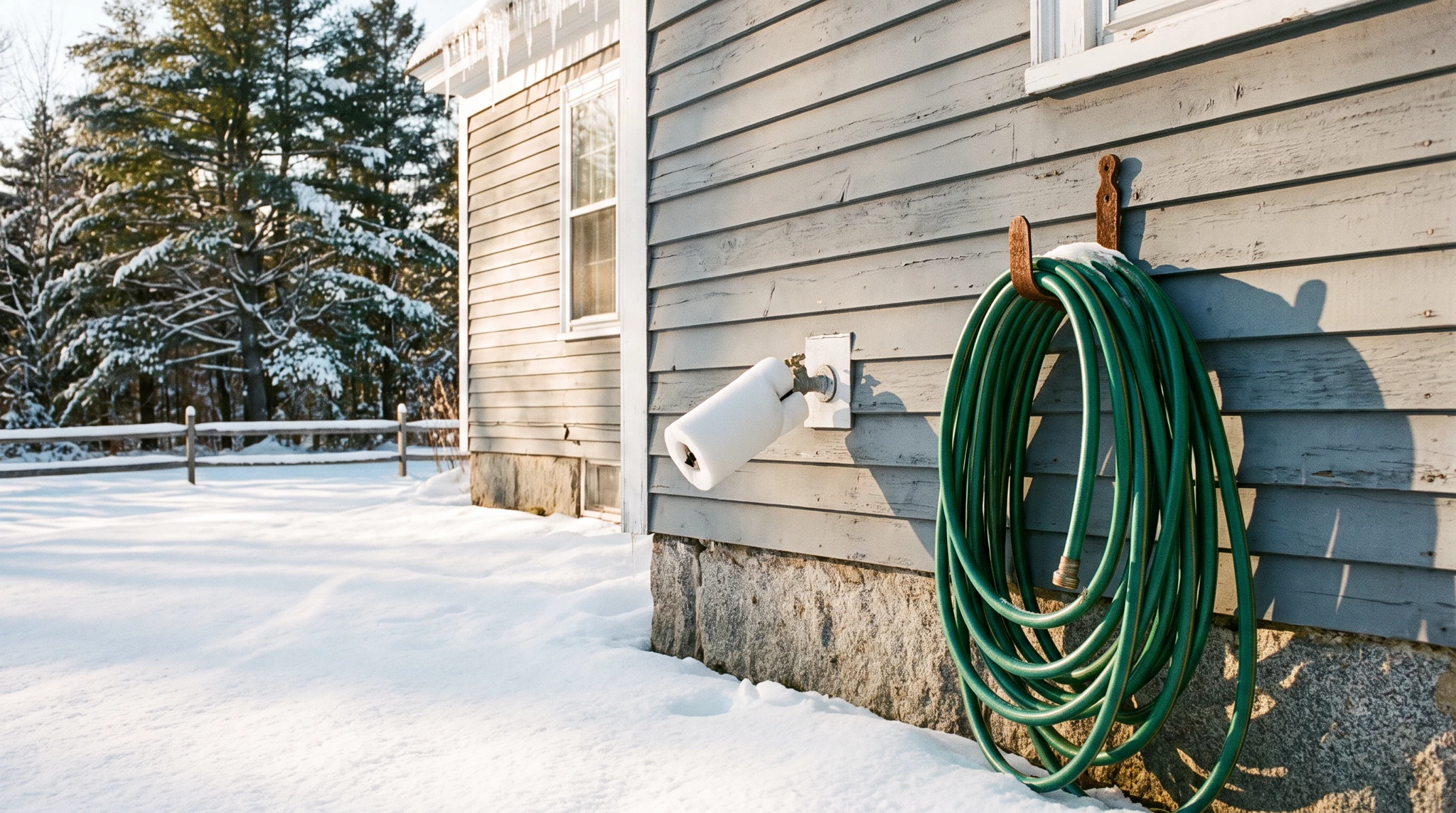
- Disconnect the garden hose, drain it and store it inside.
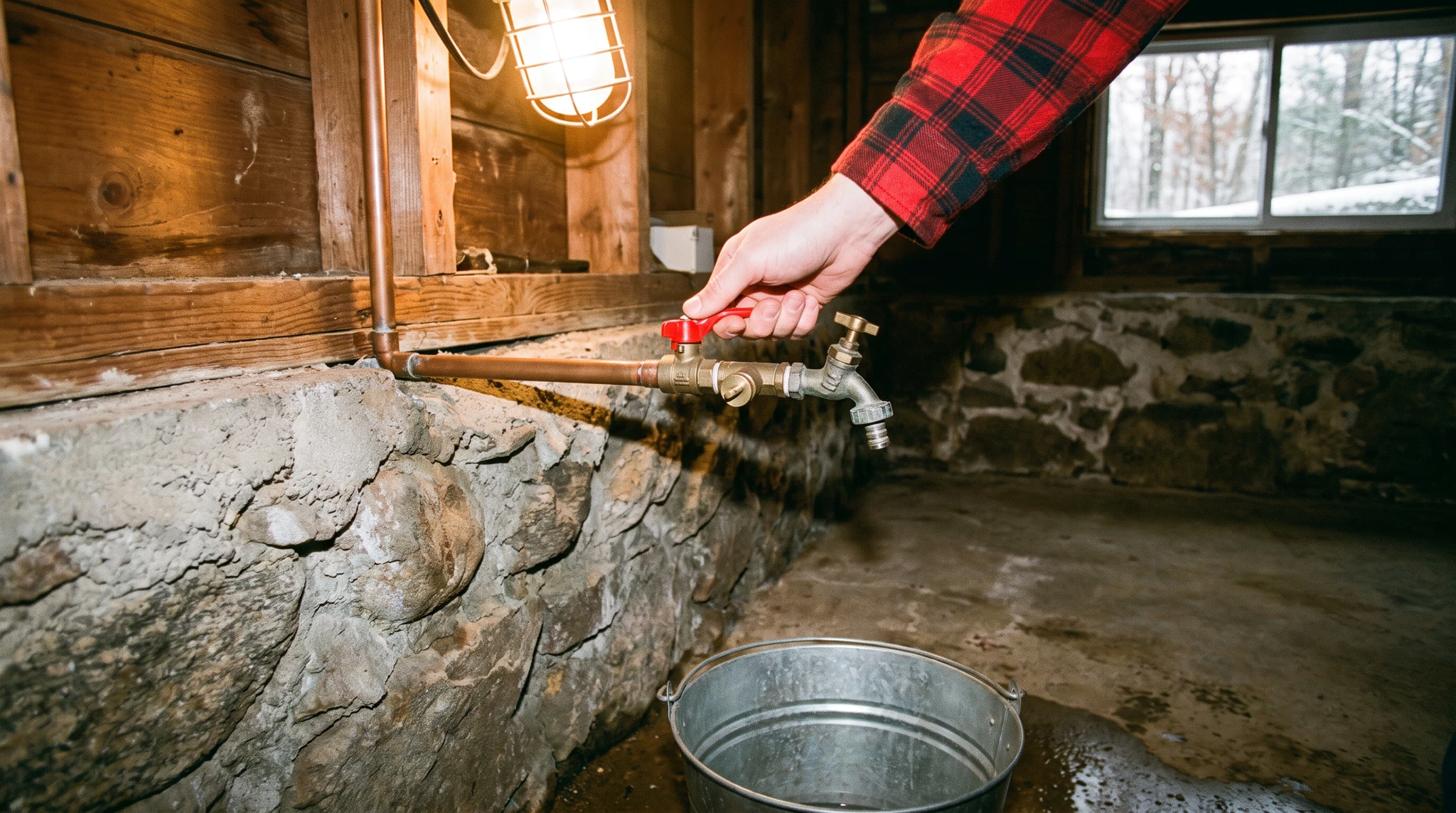
- Find the shut-off valve for each outdoor faucet. It's usually on the pipe inside the basement, right behind where the faucet comes through the wall.
- Turn that valve off.
- Go outside and open the faucet. Let any water run out, and leave it open all winter.
- If the inside valve has a small drain cap, put a bucket under it and open the cap to empty the last bit of water, then close it.
Can't find the inside valve, or the faucet still drips when it's off? We can add a shut-off or replace the faucet with a frost-free one. Call (762) 254-4897.