Seasonal
Keep Your Pipes From Freezing This Winter
- Seasonal
- winter
- frozen pipes
- prevention
New Hampshire winters are hard on pipes. Water expands when it freezes, and a pipe that splits on a January night often doesn't leak until it thaws. Here's where pipes freeze first, what to do before the first hard freeze, and what to do if one already has.
Pete
3 min read
On this page
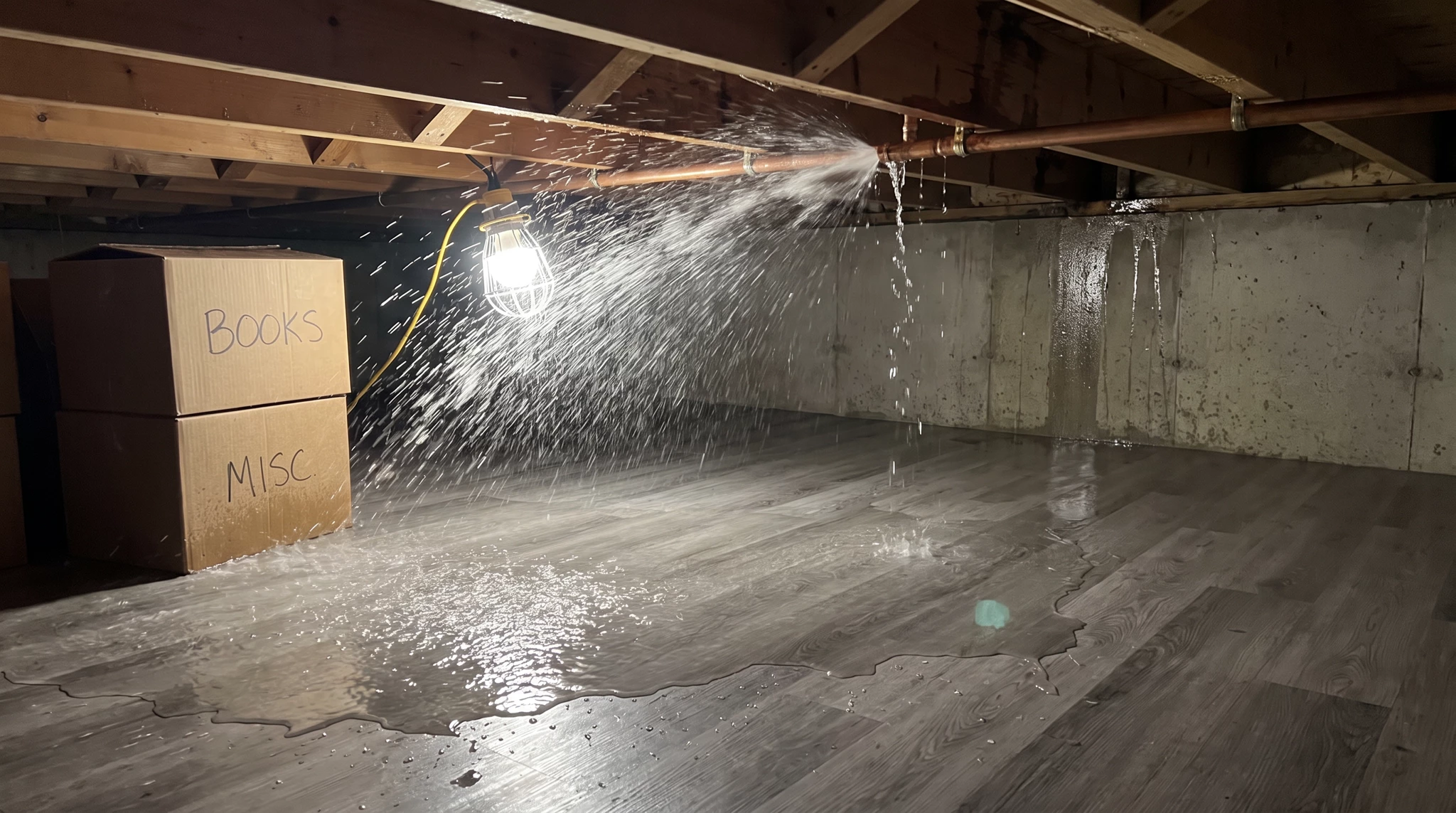
New Hampshire winters are hard on pipes. When water freezes it expands, and a pipe that splits on a below-zero night often doesn't leak at all until the weather warms up and the ice lets go. By then the water is running into a wall, a ceiling or a finished basement. The good news: a handful of simple steps before the first deep freeze prevent almost all of it.
Why pipes split in a cold snap
Water grows by about nine percent when it turns to ice. When a section of pipe freezes solid, it traps water between the ice and a closed faucet. As more ice forms, the pressure in that trapped stretch climbs until the weakest spot gives way. That's why the split is often a few feet away from where the pipe actually froze, and why you usually don't see the leak until the thaw.
Around Concord we see nights well below zero most Januaries, and older farmhouses and capes with fieldstone foundations, crawl spaces and add-on rooms give the cold plenty of ways in.
Where pipes freeze first
Outdoor faucets
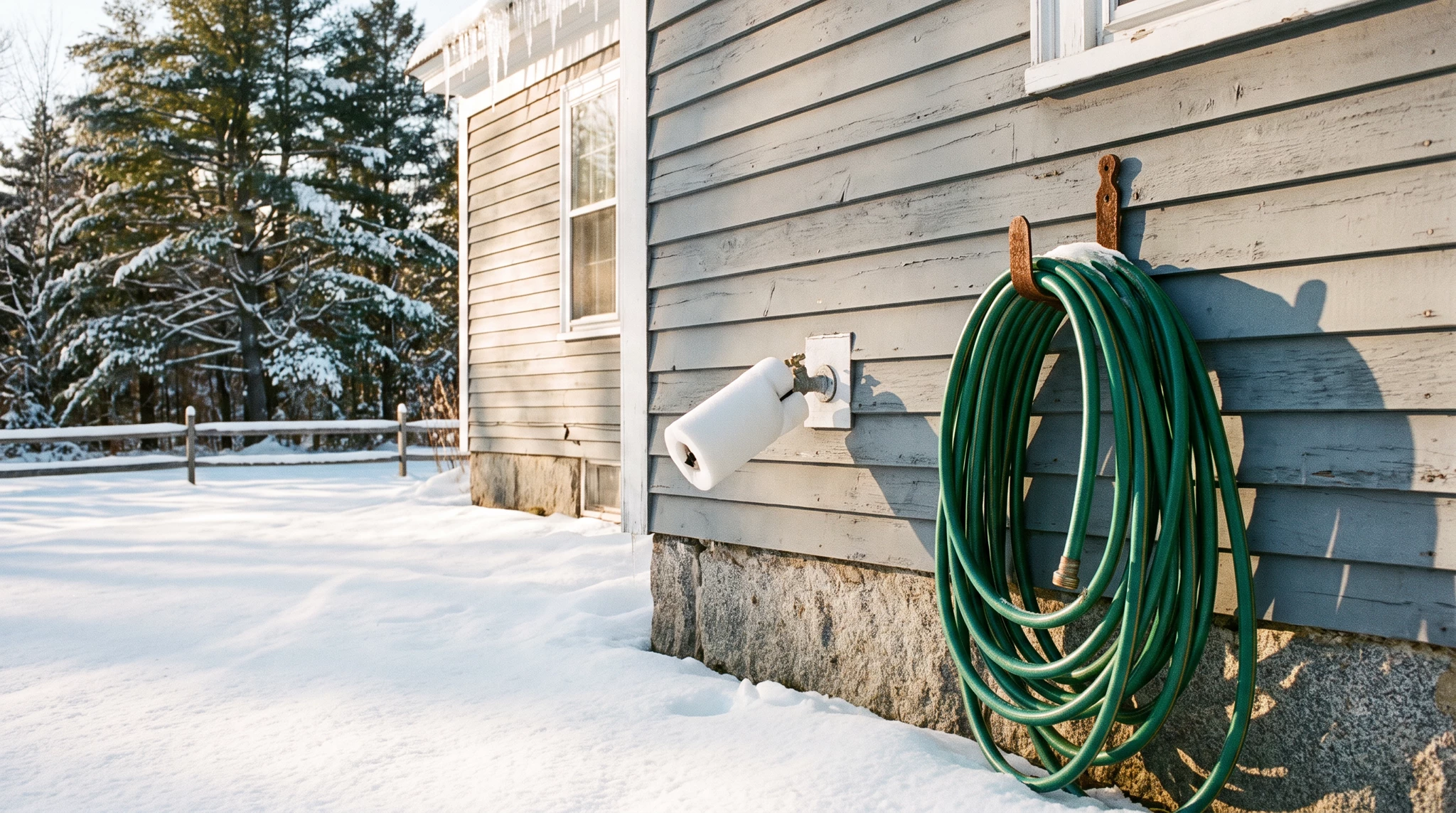
A hose left connected keeps water in the faucet, where it freezes and splits the line inside the wall.
Outside walls
Kitchen and bathroom sinks on an exterior wall, especially under a window or in a bump-out.
Unheated spaces
Crawl spaces, garages, attics, three-season porches and the sill where the foundation meets the house.
Before the first hard freeze
- Disconnect every garden hose and store it. Even a frost-free outdoor faucet can split if a hose is left on.
- Shut the indoor valve that feeds each outdoor faucet, then open the faucet outside so the line drains. Leave it open for the winter.
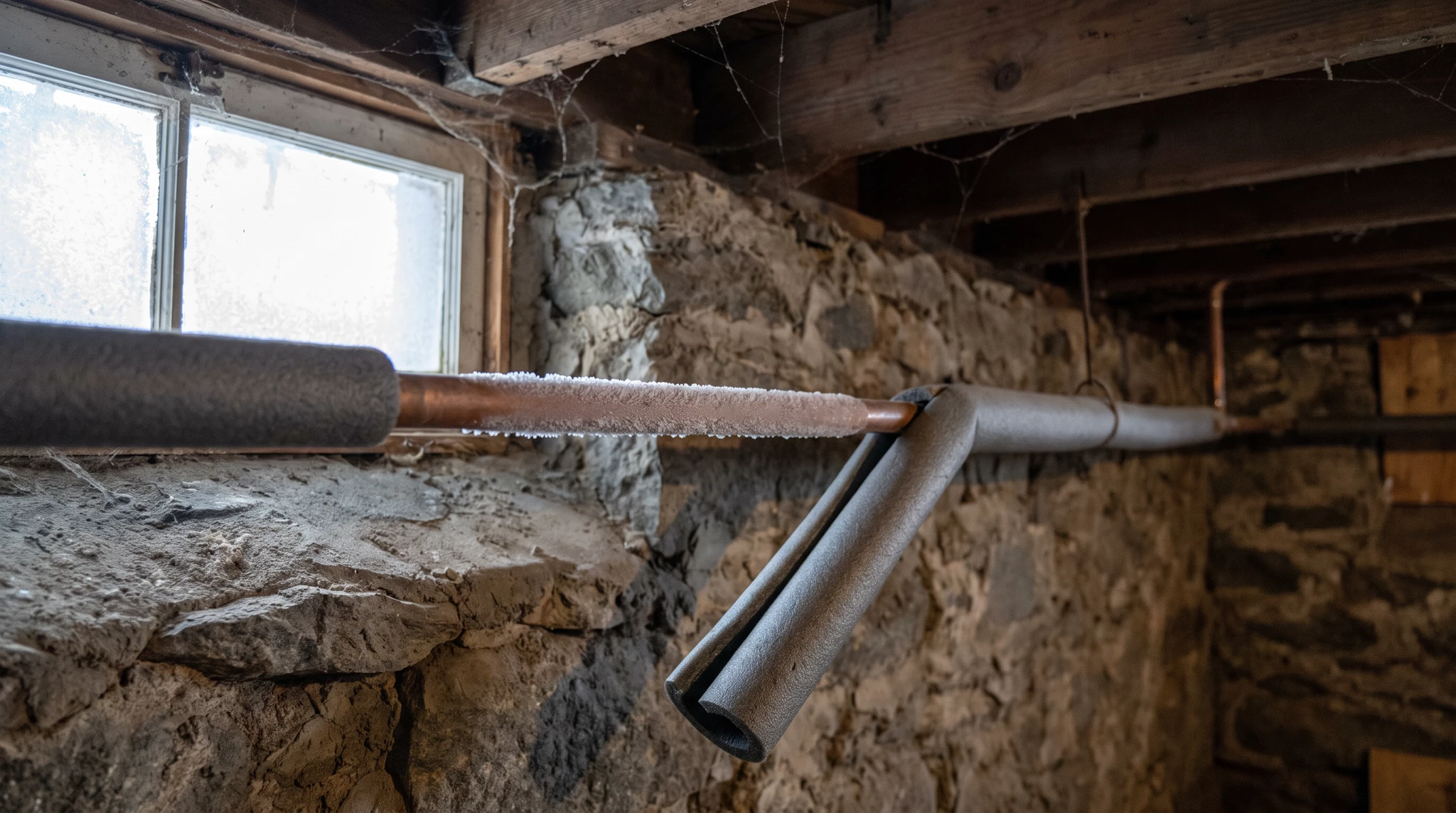
- Wrap pipes in unheated spaces with foam pipe insulation. It costs a few dollars a length at any hardware store and goes on in minutes.
- Seal drafts near pipes: gaps around the sill, dryer vents, cracked basement windows and holes where cables come through the foundation.
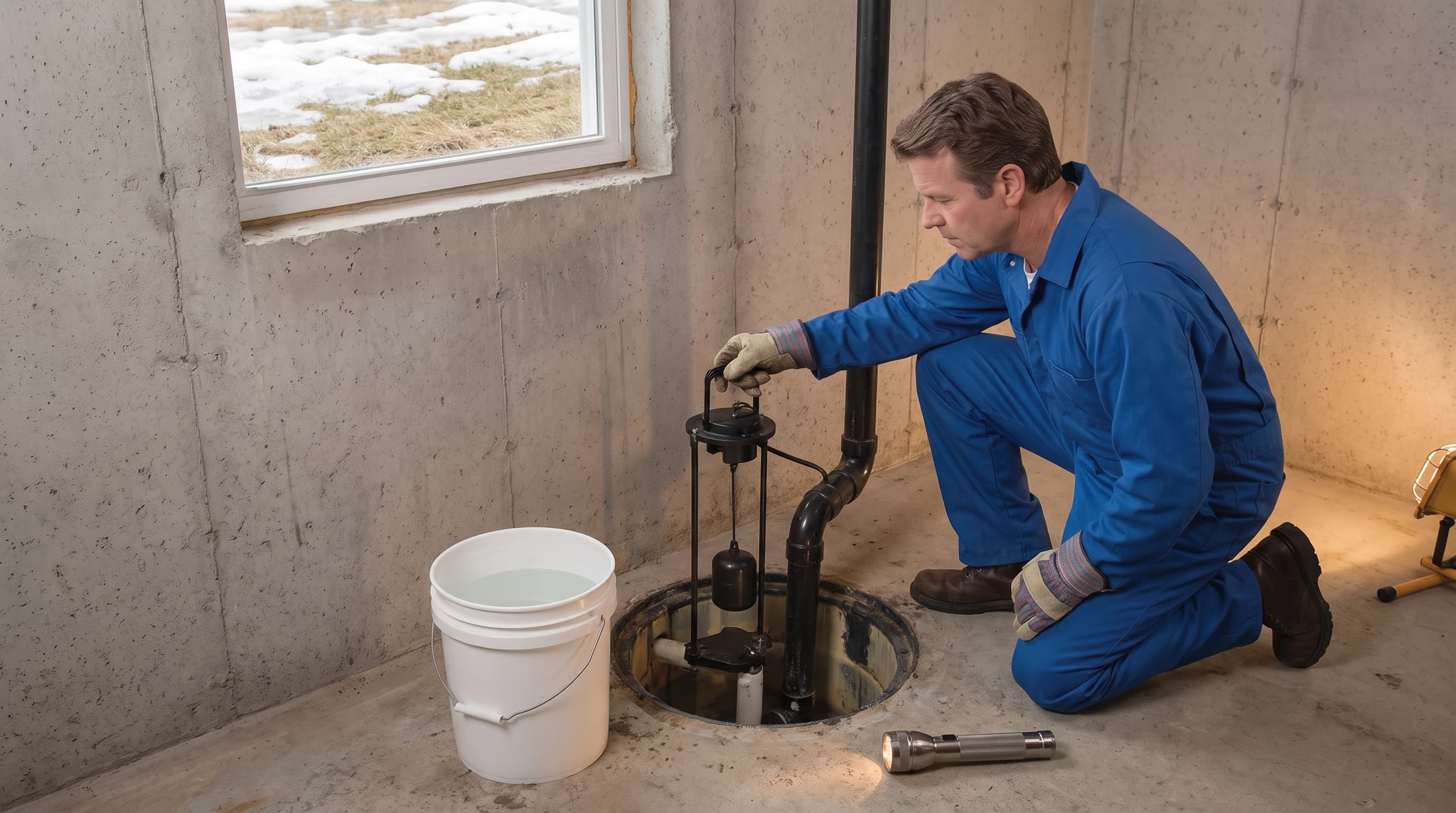
- Find your main water shut-off and make sure it turns. If a pipe ever splits, that valve is the difference between a puddle and a flood.
On the coldest nights
- Open the cabinet doors under sinks on outside walls so the room's heat can reach the pipes.
- Let the faucet farthest from the main drip, hot and cold. Moving water is much harder to freeze, and an open faucet relieves pressure if ice does form.
- Keep the garage door closed if water lines run through it.
- Don't turn the thermostat way down overnight. A few degrees of savings isn't worth a burst pipe.
If a pipe is already frozen
If you turn on a faucet on a cold morning and get a trickle or nothing at all, a pipe is probably frozen somewhere between that faucet and where the water comes in. Here's how to handle it safely:
- Open the faucet, hot and cold, so water can flow as the ice melts and pressure has somewhere to go.
- Warm the pipe slowly, starting at the faucet end and working back, with a hair dryer, a heating pad or towels soaked in hot water.
- Check along the line for bulges, cracks or frost-covered spots, and keep an eye out for drips as it thaws.
- Know where your main shut-off is before the ice lets go, in case the pipe has already split.
Most of the frozen pipes we thaw in January could have been saved by a three-dollar foam sleeve and a cabinet door left open.
When to call us
Call if you've got no water at all, you can't find the frozen section, the pipe is inside a wall or ceiling, or you can see a crack or bulge. We also re-route and insulate lines that freeze every winter so you're not fighting the same pipe every year.
Pete's Plumbing is open 24/7 for Concord and the towns around it. Call (762) 254-4897 and we'll get someone out to you.
Need A Plumber In Concord?
Open 24/7 in Concord and the towns around it. Call or book a time.